
Creating Attention
Using texture to bring a painting into focus.
“I search for…the real feeling of a subject, all the texture around it. I always want to see the third dimension of something.”
-Andrew Wyeth
There’s almost always a moment in a painting session where something clicks. For me, it’s that moment when the painting comes alive and demands attention.
You start with some marks, often random marks, then keep building, layer upon layer, until something exciting starts to take shape and leads you towards a finished piece, a landscape in my case.
Most of my work starts with random brush strokes on a slightly textured surface, some quick, unplanned mark making. Then I keep building towards texture trying to create a physicality that will attract the eye. Something that demands attention and conveys some sort of mood and energy.
That texture often comes in the form of impasto brush strokes or from the scraping of paint with a palette knife. That’s the structural texture. Then there’s the visual texture I often use simply to create the look of some action but with a calmness about it. And then I balance the whole thing with some smooth passages that offer some depth perspective and a bit of rest for the eye.
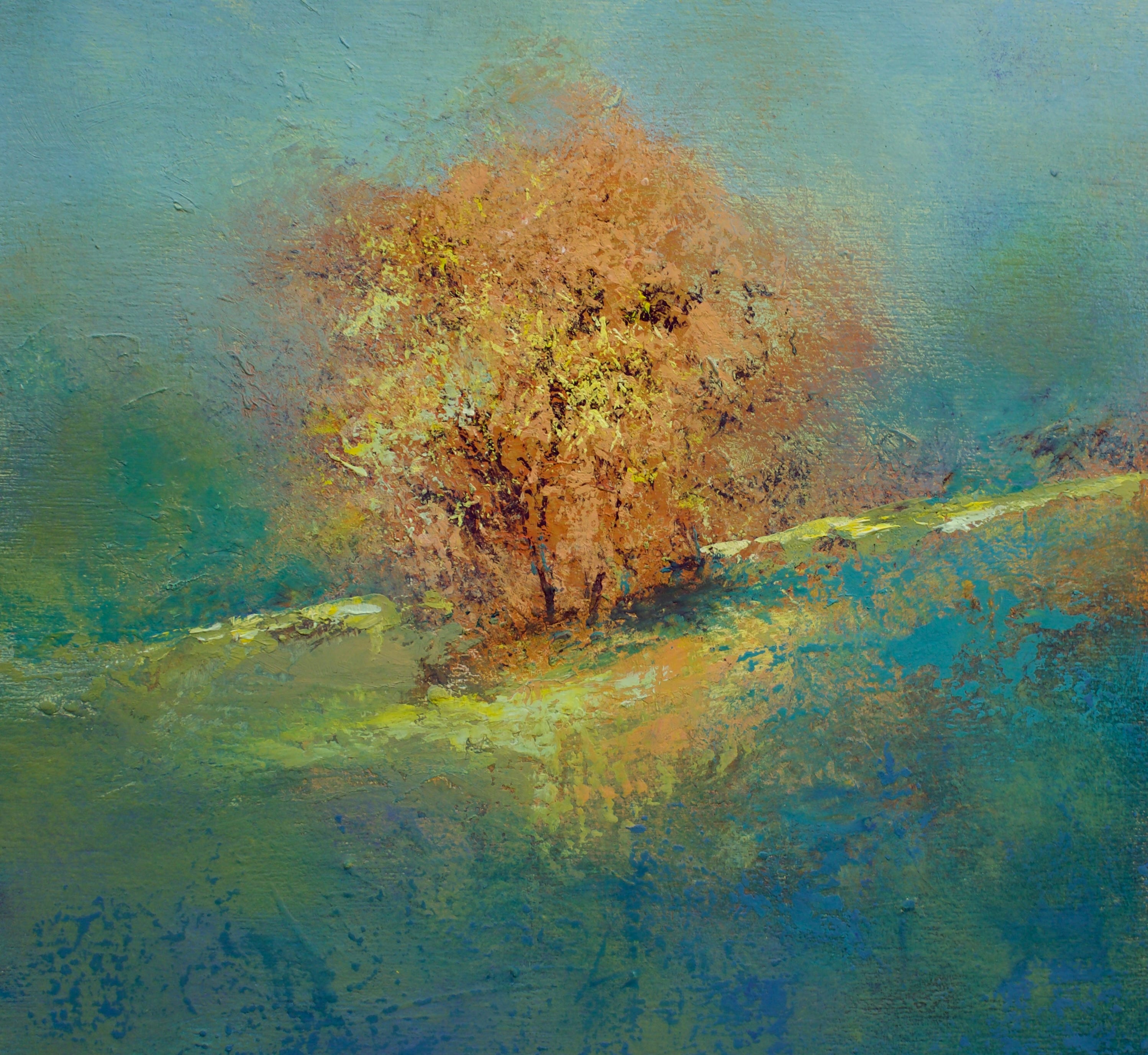
For example, in the painting above I created a smooth sky to show distance then everything else is a balance of structural and visual texture. The subtle visual texture of the foliage is controlled by hue and value while the light on the land is a bolder, slightly three-dimensional texture.
The visual texture in this piece, the tree foliage, was created by dabbing with plastic wrap and for the physical texture, I used a palette knife to scrape paint both for the darker foreground texture and light on the land.
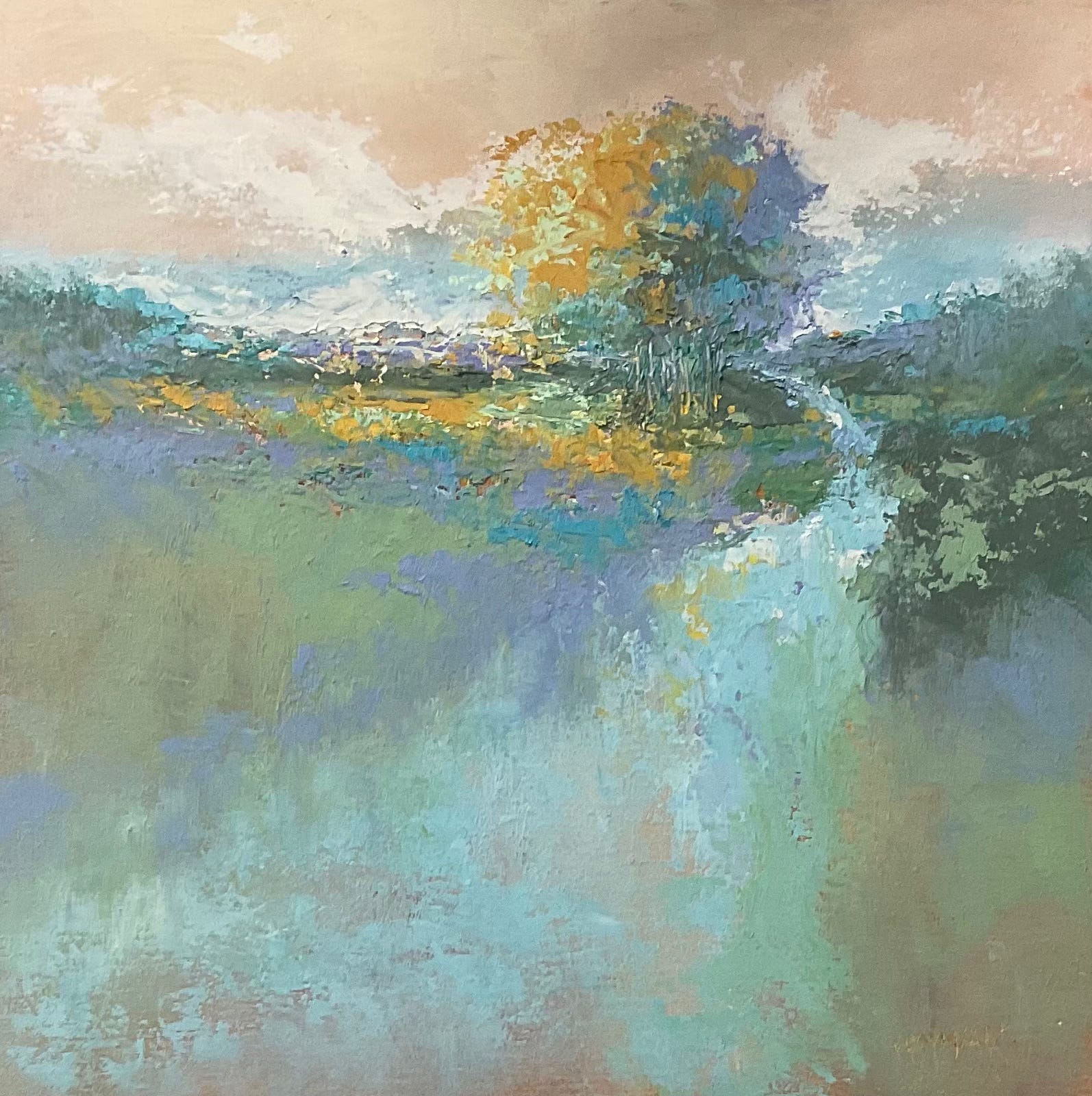
The texture in this piece was developed by using a palette knife for everything. Paint application moved from visual texture in the smoother areas to a more tactile presence at the tree line. The smooth areas were scraped thinly and the stronger texture was created with heavier amounts of paint. This painting is also oil, by the way, and with the addition of cold wax the paint becomes thicker, more impasto-like. The top painting is acrylic and the impasto applications are more subtle.
With the above painting, I wanted to create a physically active surface in the main elements and to create the feeling that you might like to touch it.
Of the two types of texture - visual and physical I lean towards the tactile in most of my work. If it’s texture you can feel then I’ve done my job of letting the viewer know that somehow I was involved in making this piece.
As always, thanks for reading.
Cheers,
Bob
Thank you ...beautiful artwork!
These are brilliant! Thank you for sharing. Lately I have been addin texture to my pastels with alcohol brushing on top of first dark layer and then gesso under top layers...very exciting. I also like your use of colors, very original.