
Repeat, Repeat, Repeat
Pattern and repetition in art - what’s it all about…
“I think you get meaning through repetition.”
- Damien Hirst

Squint your eyes as you read this post. Squint so that the words are blurry and you only see horizontal lines. What you’re seeing is repetition. Horizontal lines descending the page. It’s a design guideline that creates movement. Whether you’re reading the words or simply following the blurry lines, your eyes are moving to take in the next line.
That repetition of design elements creates meaning, as Hirst says in the above quote. It also brings a vitality and rhythm to an individual piece of art.
Repetition requires an icon. A single element you plan to use several times in a painting. Some artists repeat that icon almost identically throughout a work. Think Andy Warhol’s soup cans and Marilyn Monroe screen prints, even Hirst’s colour spots on canvas, but others use the icon as a road map, varying the scale, colour or value of the icon to create energy and interest. Often defining the story of the work itself.
The painting above shows repetition of a simple triangular shape - an evergreen tree. The tree becomes a pattern in the painting. I could have repeated the same dark green tree throughout the design making a flat, decorative pattern. But instead I choose to vary the scale and colour of the icon making it more visually interesting, creating movement and depth. As scale diminishes, elements recede. As colours soften and become lighter, the trees appear to move into the background.
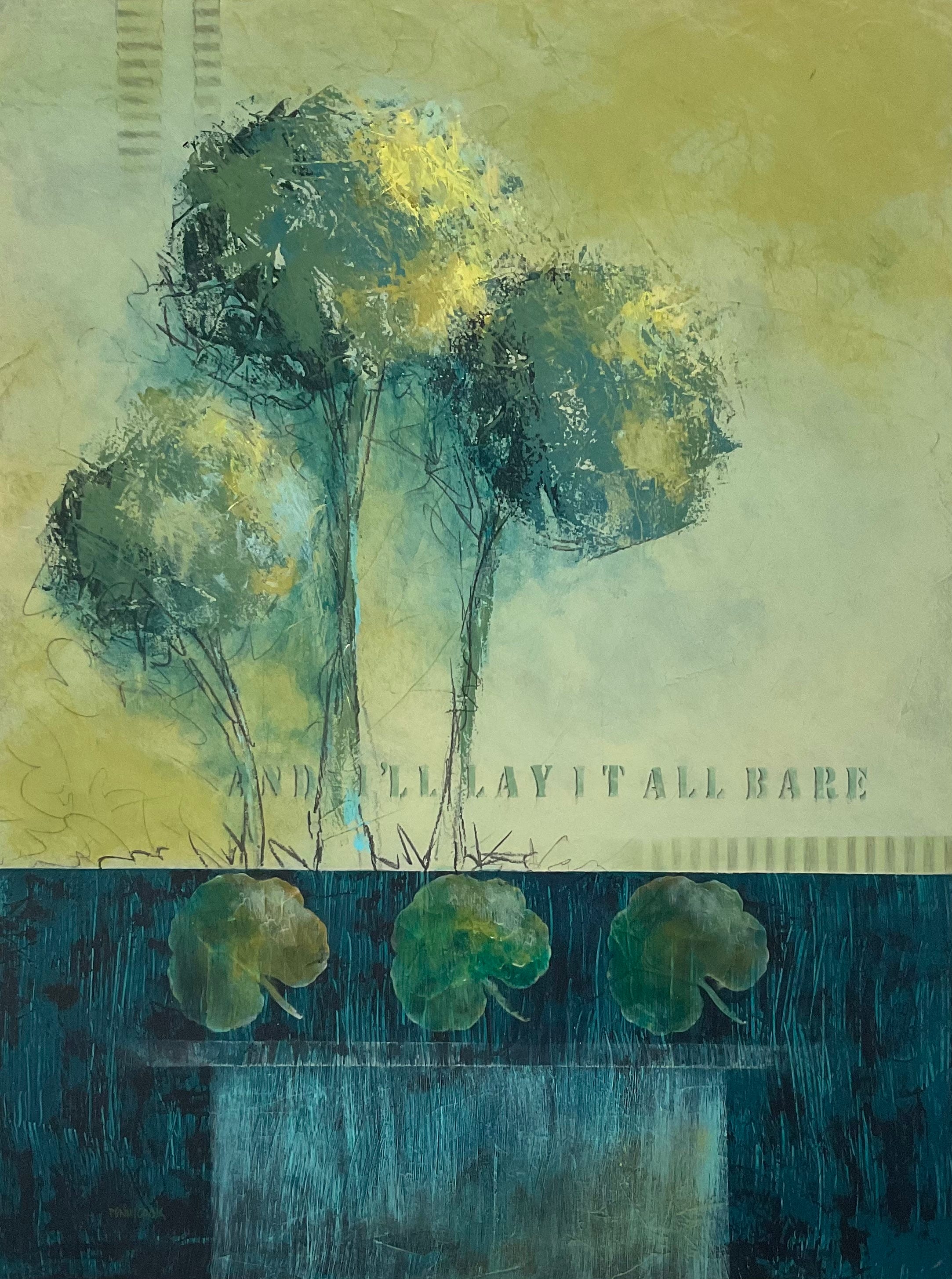
The painting above is a combination of repetition and pattern. The trees at the top of the painting are similar yet have their differences. The leaves on the table are pure mechanical repetition or pattern. The trees and the scraggly graphite lines show movement as do the short vertical and horizontal lines at the top and middle of the image. These short bars of colour are repetitive pattern but they, as well as the vertical lines in the blue section, provide a sense of rhythm to the piece.
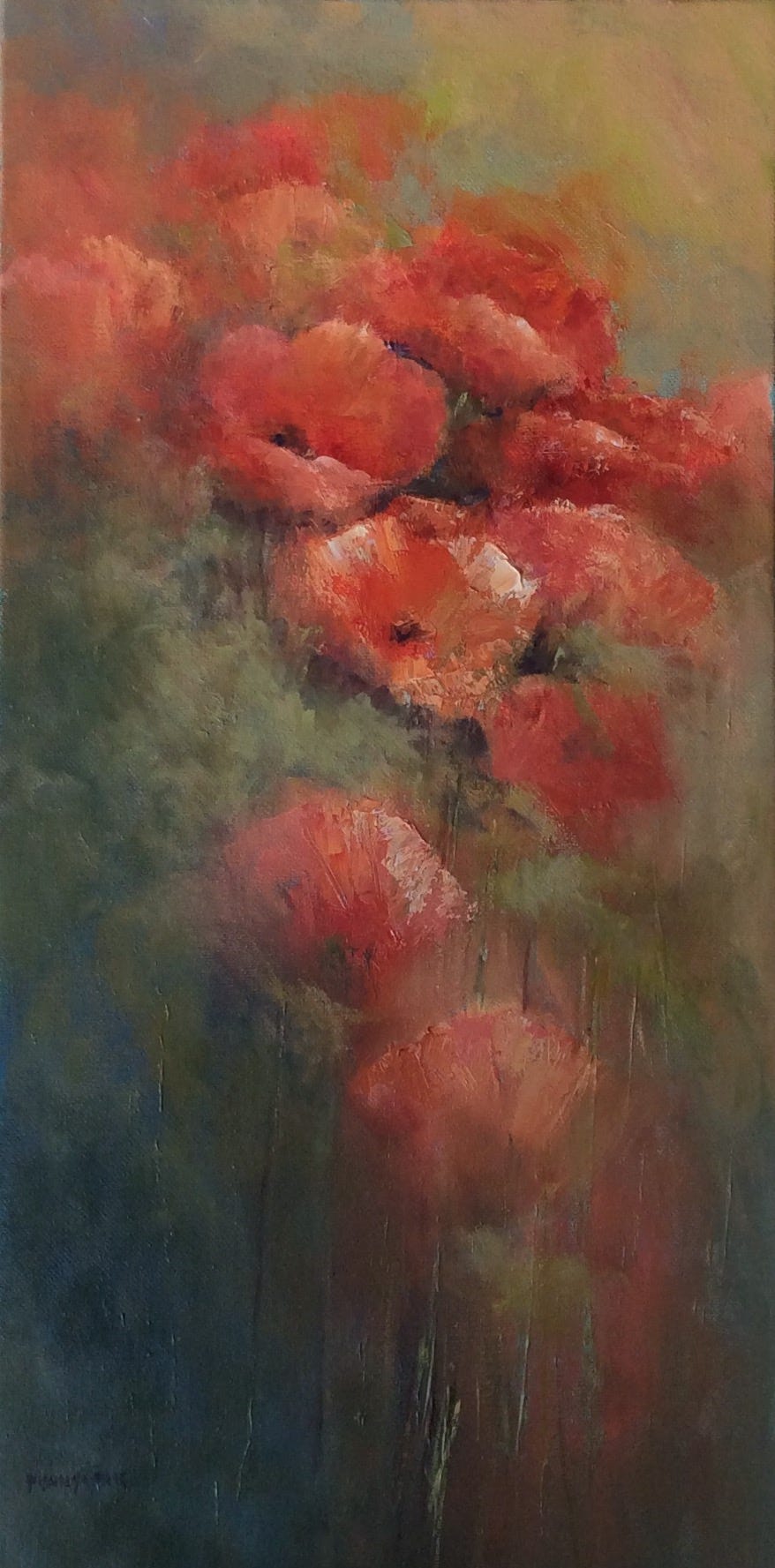
The poppies are repeated pattern but the light and dark patches of colour in the middle of the painting break up the sameness of the image as do the fading poppies top and bottom of the design. The poppies also represent years of remembrance, past, present and future.
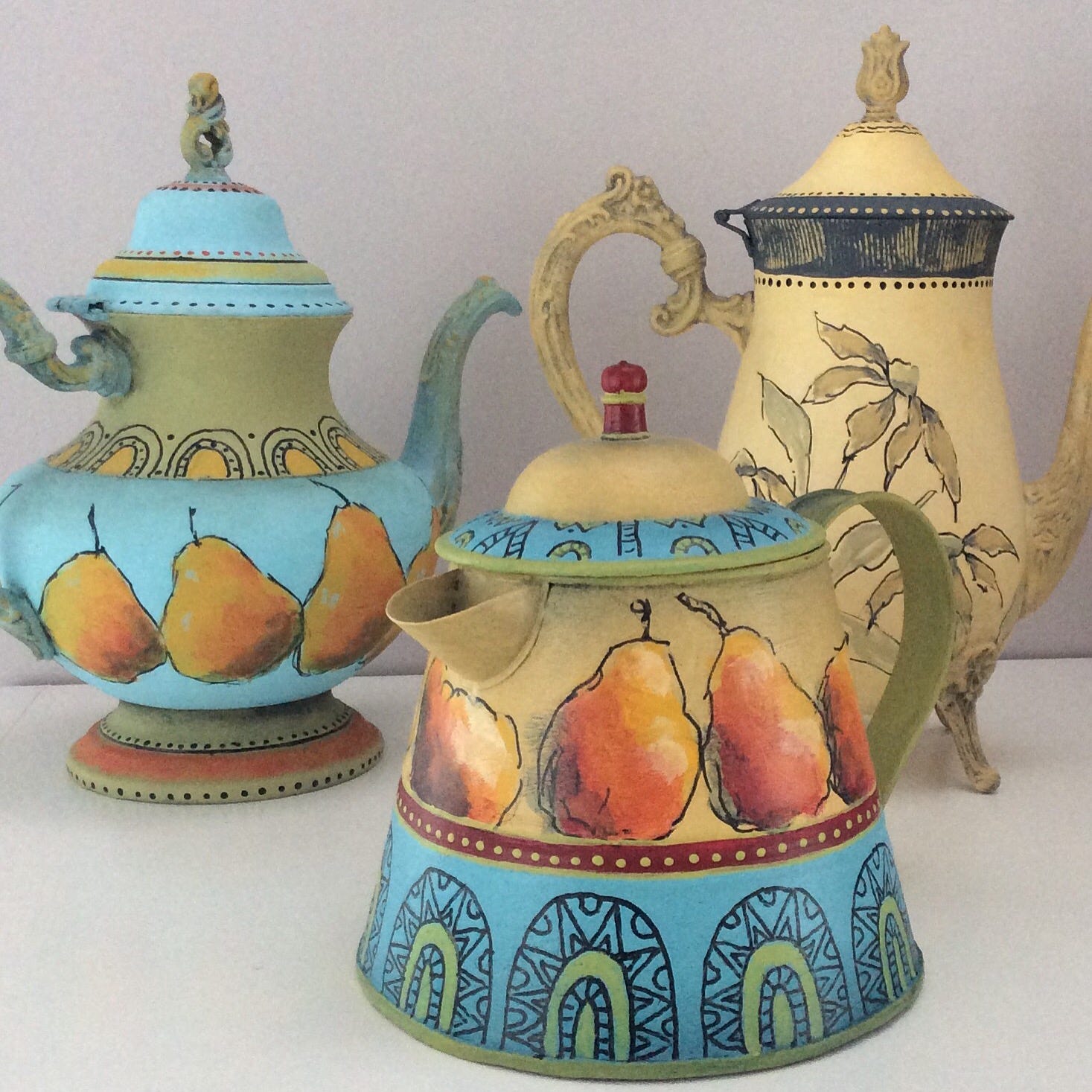
And finally, these metal coffee pots are pure decorative joy. I painted these with repeated images and patterns that weren’t meant to offer any particular compositional ideas, but merely for the fun of seeing what repeated lines and shapes can add to a three-dimensional surface.
Thanks for reading.
Cheers,
Bob
Great discussion, thanks. All the pieces are wonderful, but those pots . . . !